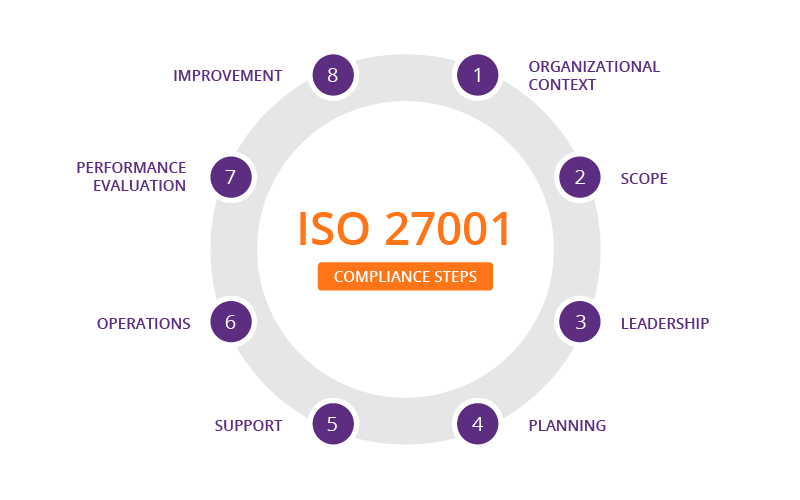

ISO 27001 Implementation
ISO 27001 is an international standard that provides a framework for establishing, implementing, maintaining, and continually improving an Information Security Management System (ISMS). Its primary objective is to help organizations systematically protect sensitive information, manage risks, and ensure the confidentiality, integrity, and availability of data. Implementation of ISO 27001 is not only about compliance but also about embedding a culture of information security into the organization’s operations.
Planning and Scope Definition
The first phase of ISO 27001 implementation involves planning and defining the scope of the ISMS. This requires understanding the organization’s business objectives, regulatory obligations, and critical information assets. Scope definition involves determining which business units, systems, processes, and geographic locations will be included in the ISMS. During this phase, the organization identifies the stakeholders, resources, and timelines required to establish an effective information security framework. Planning also involves obtaining management commitment, as senior leadership plays a critical role in driving the program and allocating sufficient resources.
Implementation and Operationalization
With policies and procedures in place, the organization begins the practical implementation of the ISMS. This involves deploying technical controls, configuring security systems, and ensuring that operational processes align with ISO 27001 requirements. For example, access management systems may be configured to enforce least privilege, network security controls may be applied to protect critical infrastructure, and backup and recovery processes are tested to ensure data availability. Operationalization also requires continuous monitoring to verify that controls are functioning as intended and that risks are effectively mitigated in daily operations.
Risk Assessment and Treatment
A central element of ISO 27001 is the assessment of information security risks. Organizations must identify potential threats and vulnerabilities that could impact the confidentiality, integrity, or availability of their information assets. This involves evaluating both internal and external risks, ranging from cyberattacks and system failures to human error and natural disasters. Once risks are identified, they are analyzed for likelihood and potential impact, allowing the organization to prioritize its responses. Risk treatment follows, where controls are selected and implemented to mitigate, transfer, accept, or avoid each identified risk. ISO 27001 provides an annex of standard controls, but organizations may also implement custom measures tailored to their specific environment and risk profile.
Establishing Policies and Procedures
Following risk assessment, the organization develops the policies, procedures, and processes necessary to support the ISMS. This includes defining roles and responsibilities for information security, establishing access controls, configuring incident management processes, and documenting operational procedures. Policies serve as the guiding principles for secure practices, while procedures provide step-by-step instructions for staff to follow. Training and awareness programs are crucial at this stage, ensuring that all employees understand their responsibilities and the importance of compliance with the ISMS.